
Bees sting to heal, not harm
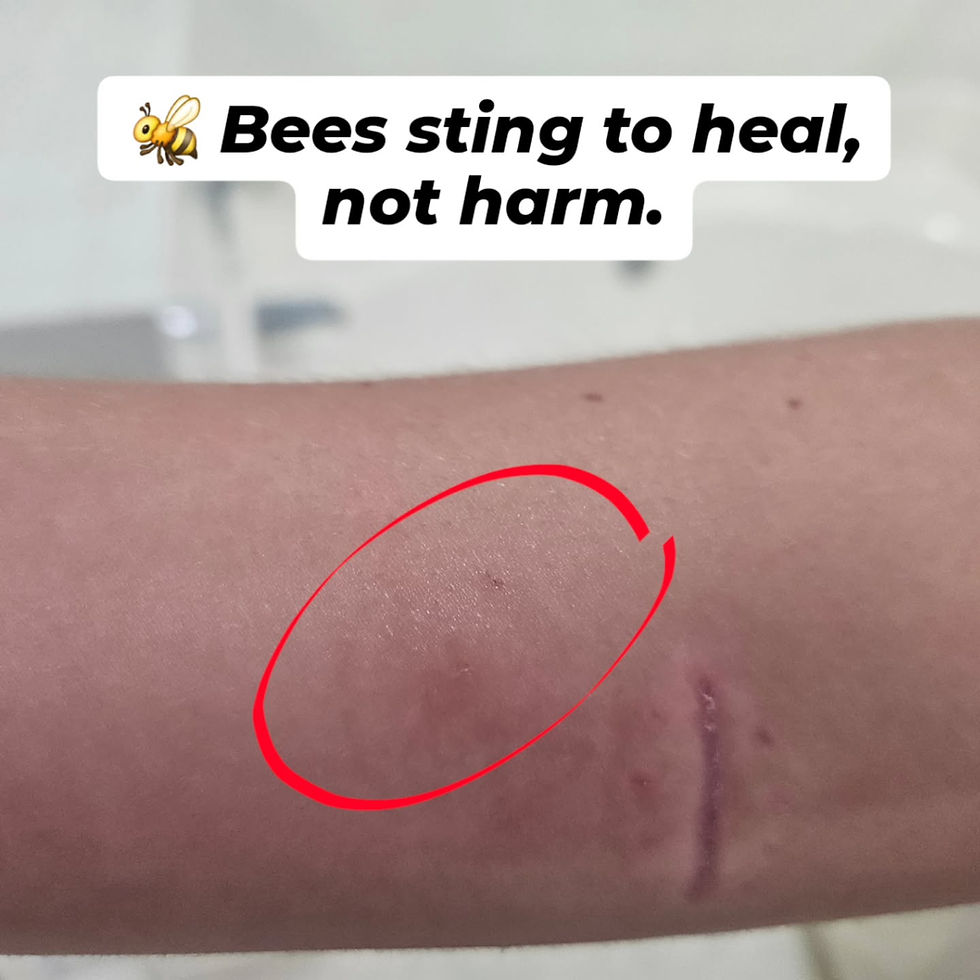
Last month, I shared how my son was bitten by a Rottweiler and had to get stitches... and how we worked to get him back on the football field and basketball court within just 2 weeks. Wild if you saw the before pics 😬
At one of his first football practice back, he got stung by a bee on his right forearm, directly beside the wound site.🐝🤕
When he told me I was like, "SO cool!! Good lookin out bee!"
Bees sting to heal, not to harm. Bee venom contains a powerful amino acid called melittin, which has strong antimicrobial properties.
Bees also operate through frequency. Their antennae can detect frequencies in their environment in the range of approximately 265–350 Hz. They hover and sting in areas where they sense discomfort or imbalance.
Bees have been known to sting in areas where fascia is holding emotional stagnation, where cancer is present, or where there is muscle pain or spinal injury. These are all expressions of imbalance in the body's energy projections.
Some integrative oncologists incorporate bee venom therapy into their holistic cancer treatments, and bee venom has also found its way into a range of anti-aging skincare products.
And it's not just the venom that's magical - local bee pollen, royal jelly, honeycomb, and propolis have powerful medicinal properties.
The next time you get stung, thank the bee. Depending on the species, she may have risked her life to help you heal. 🐝


Comments