
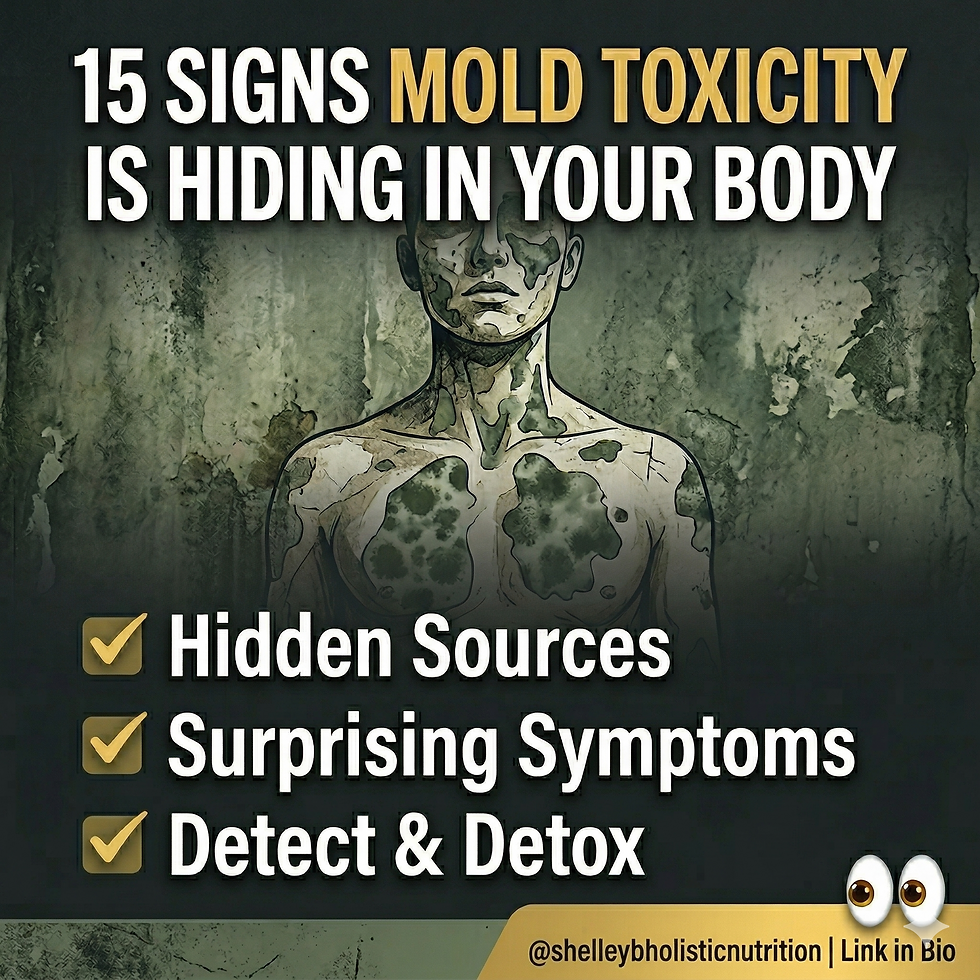
15 Signs Mold Toxicity Is Hiding in Your Body
Updated: Mar 30
Have you ever had a sudden downturn in your health?
Do you have a history of mold exposure?
Have you ever experienced “sick building syndrome” — where you feel worse at home, school, or work, but noticeably better when you leave?
If so, mold illness could be a missing piece.
Mold illness occurs when mold grows indoors and produces toxic compounds called mycotoxins. These toxins don’t just stay in your environment — they can actually colonize inside the body, especially in mucosal areas like the gut, lungs, and sinuses.
Because of this, many people move out of a moldy environment… and still don’t feel better.
Mold is also incredibly sneaky — it can mimic other conditions and is frequently misdiagnosed.
Mold is commonly found in:
• Water-damaged buildings (water damage isn’t always obvious — even new construction can have hidden mold)
• Air and water
• Foods like grains, nuts, and even coffee
• Water damaged vehicles
• Contaminated pharmaceuticals/supplements
Once inside the body, mycotoxins can:
• Suppress the immune system
• Reduce oxygen delivery
• Increase inflammation and endotoxin load
Common signs + risk factors for mold toxicity:
• History of water damage in your home, work, or school
• Past or current plumbing leaks
• Wet spots or musty smells in your environment
• Mildewy smell in your car
• Frequent condensation on windows
• Chronic sinus infections or irritation
• Nighttime coughing or chest tightness
• Sensitivity to dust, animals, or certain environments
• Skin rashes or unexplained conditions
• Frequent urination or bladder urgency
• Headaches or migraines
• Extreme fatigue
• Feeling better when you leave your usual environment
If this is resonating, I’ve included a quick self-assessment below to help you evaluate whether mold could be playing a role in your symptoms.
Let’s talk solutions — because this part matters most.
When it comes to detoxing mold, binders are everything. They help pull toxins out of the body so they aren’t reabsorbed and recirculated.
Here are my go-to options depending on where you are in your healing journey:
✨ Carboxy
This is the strongest mold binder available. It’s specifically designed to bind a wide range of mycotoxins and is incredibly effective for those who know (or strongly suspect) mold is a major issue. I often use this as a standalone support or layer it into more advanced protocols.
Register at www.cellcore.com with code 1WB98bYU.
✨ MYC Kit
This is a comprehensive, beginner-friendly mold protocol that combines drainage support, detox pathways, and targeted binding. It’s a great place to start if you’re newer to detox or want a more structured, step-by-step approach without overwhelming your system.
Register at www.cellcore.com with code 1WB98bYU.
This is for those who are ready for deeper, more intensive detoxification. It builds on the foundational MYC Kit and includes stronger support for breaking down biofilms and clearing more deeply embedded mold toxins. Ideal for more complex or long-standing cases.
Register at www.cellcore.com with code 1WB98bYU.
✨ Toxic Fungi Mold Nosode – Inactivated microdoses of common mold allergens to help you build an immune response naturally, overcome an allergy or fight an infection. They're like an oral vaccine or allergy shot without the dangerous adjuvants. You can take them prior to getting sick or even with a thriving infection.
Register at www.professionalformulas.com with code GEE213M.
The key with mold detox is doing it strategically and in the right order — opening drainage pathways first, then binding and clearing toxins so your body can actually eliminate them safely.
Want a clear starting point for your detox? Consider a mold test first.
🦠 MycoTOX Mold Test (Mosaic Diagnostics) – $350
If you’ve had water damage, lived in humid climates, or struggle with mysterious symptoms, mold could be playing a role. Blood tests often miss it, so consider a MycoTOX Mold Test. It checks for 11 mold toxins in urine and gives a much clearer picture of hidden exposure.
If you suspect mold toxicity, don’t guess — let’s create a plan that works for your body.
Simple ways to reduce mold exposure at home:
Add air-purifying plants — They naturally help clean the air. If you want extra protection, step it up with a high-quality purifier like an Air Doctor.
Treat leaks immediately — Any plumbing or roof leaks should be fixed as soon as possible to prevent hidden mold growth.
Keep humidity low — Aim for 40–50% humidity indoors; a dehumidifier can be a lifesaver in damp areas like basements.
Ventilate bathrooms and kitchens — Use exhaust fans or open windows when cooking or showering to reduce moisture buildup.
Regularly inspect hidden areas — Check under sinks, behind appliances, and in attics or crawl spaces where water damage can go unnoticed.
If you strongly suspect mold, call in the pros — We Inspect offers thorough home inspections. Ask them what percentage of homes they find mold in… the number is often shocking!
If you want help choosing the right protocol or next steps, just shoot me a DM — I’ve got you 🤍



Comments